Product Description
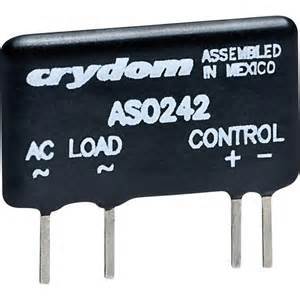
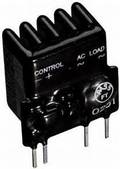
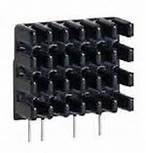
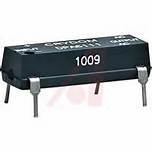
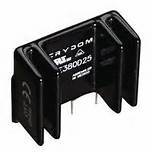
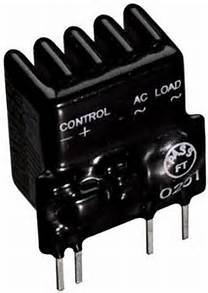
With rich market knowledge as well as experience, we are engaged in manufacturing and exporting PCB Mount SSR. This relay is ideal to use in applications where a small, power-dense package is required. To manufacture this relay, we use finest quality materials, procured from the trusted and reputed vendors of the market. This relay is available for applications requiring from 1 to 25 Amps at 24 to 660 VAC or 1 to 20 Amps at 1 to 200 VDC. We offer this PCB Mount SSR at cost effective prices to clients.
Features:
- Compatible with all standard I/O module boards
- SCR output
- Low off-state leakage current
Solid State Relays - PCB Mount
- 1A TO 40A.
- Available with either AC or DC control input.
- Low off-state leakage current.
- Zero-crossing (resistive loads) or random-fire (inductive / phase control) outputs.
- SCR Output.
- Pinout compatible with all standard I/O module boards.
Optimized for Industrial AutomationEngineered for use in automated manufacturing and process control environments, this PCB Mount SSR provides precise control of AC loads with DC input signals. The devices quick response and high reliability make it suitable for repetitive load switching and environments prone to vibration, ensuring continuous operation under demanding conditions.
Robust Safety and Longevity FeaturesEquipped with a dielectric strength of 2500VAC rms and insulation resistance over 1000 M, this SSR ensures electrical safety and separation between control and load sides. The arc-free, solid-state design not only extends life expectancy beyond one million operations but also reduces maintenance by eliminating moving parts.
Versatile and Compact DesignDesigned for seamless PCB integration, this SSR combines high load capacity and compact form factor, accommodating a wide range of voltages (24380 VAC, 332 VDC control). Its plastic encapsulation and copper terminals promote efficient connectivity and durability, while the LED indicator streamlines troubleshooting and monitoring.
FAQs of PCB Mount SSR:
Q: How is the PCB Mount SSR installed in a circuit board?
A: The SSR is mounted directly onto a printed circuit board (PCB) using its designated terminals. Care should be taken to align the copper terminals with PCB traces and ensure correct polarity for control and load connections. Soldering is required to secure the relay onto the board, following standard PCB assembly procedures.
Q: What safety features does this SSR offer during operation?
A: This SSR features a high dielectric strength (2500VAC rms), insulation resistance exceeding 1000 M, and an IP20 rating for basic touch protection. Its solid-state switching mechanism eliminates arc formation, reducing risks of fire and electrical noise, while the LED indicator provides instant status feedback.
Q: When should I choose this SSR for load switching applications?
A: This SSR is ideal for applications requiring fast, frequent switching, such as industrial automation, PCB circuit control, and environments susceptible to vibration. Its arc-free operation and long mechanical life make it suitable for tasks where reliability and reduced maintenance are crucial.
Q: Where can this SSR be used effectively in automation systems?
A: This relay is commonly used in industrial control panels, automated machinery, assembly lines, and PCB-based process controls. Its compact design and robust performance make it suitable for confined spaces and vibration-prone environments found in modern automation setups.
Q: What is the process for troubleshooting the SSR using the LED indicator?
A: The built-in LED status indicator provides immediate visual cues about the relays operational state. If the LED is ON, the relay is activated. When it remains OFF during expected operation, check the control voltage, input impedance, and PCB connections to identify potential issues.
Q: How does using a solid-state SSR benefit industrial automation?
A: Solid-state switching eliminates mechanical wear, providing over one million operation cycles. This increases system uptime and reduces maintenance requirements. Additionally, arc-free switching enhances reliability and safety, especially in environments with frequent or rapid switching needs.



 Send Inquiry
 Send Inquiry
 Send SMS
 Call Me Free
