Product Description
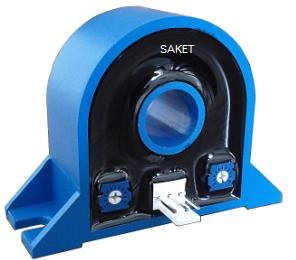
Hall Effect current and voltage Transducer with comprehensive range of accurate, reliable and
Galvanically isolated devices to measure AC/DC current.
- Wide range from 3A to 6000A
- AC/DC voltage from 10V to 3000V
- Various technology; open loop, closed loop, ac/dc current sensor, current transformer etc.
Precise and Fast Current SensingWith a response time of under 3 microseconds and a linear analog output ranging from 66 to 100 mV/A, this Hall Effect sensor delivers reliable and immediate current measurements. Its quiescent output voltage and low offset ensure accuracy for sensitive electronic projects and critical applications like overcurrent protection.
Rugged Design and Easy InstallationManufactured with high-quality ABS and PCB materials, the sensor is built to last and withstand a wide range of temperatures. Its compact form factor enables easy PCB mounting and integration into systems where space is limited, while reverse polarity protection ensures safety during installation.
Versatile and Compliant for Wide ApplicationsSuitable for both AC and DC current measurement, the sensor supports applications including system control, measurement devices, and load monitoring. The device meets RoHS standards, guarantees 100,000 cycles life expectancy, and can be utilized across diverse industries as a current measuring and monitoring solution.
FAQs of Hall Effect Current Sensor:
Q: How do I install the Hall Effect Current Sensor on my PCB?
A: The sensor is designed for PCB mount applications. Simply align its compact body (33mm x 13mm x 6mm) with compatible PCB slots and connect the 3-pin interface (VCC, GND, Vout) to your power supply and data acquisition circuitry, ensuring proper orientation to utilize its reverse polarity protection.
Q: What types of current and applications is this sensor suitable for?
A: This sensor can measure both AC and DC currents up to 20A, and its linear analog output is ideal for overcurrent protection, load monitoring, and system control in measurement devices and electronic projects.
Q: When should I use this sensor instead of traditional shunt resistors?
A: Choose this Hall Effect sensor when you require electrical isolation, high accuracy (66100 mV/A), rapid response (<3s), and minimal insertion loss. It excels in circuits where safety, compact form factor, and fast detection of current changes are paramount.
Q: Where can I benefit most from using this sensor?
A: The sensor is optimized for embedded electronic systems, power electronics, and monitoring setups where PCB mounting and isolated measurement are critical. Its small footprint and reliable performance suit projects with space constraints or demanding operational environments.
Q: What is the process for connecting and powering the sensor?
A: Connect the external 5V DC power supply to the VCC and GND pins, and route the load current through the sensors input. The analog voltage output (Vout) can then be read by a microcontroller or measurement device, proportional to the measured current.
Q: What benefits does this sensor offer over non-isolated or non-Hall sensors?
A: It provides up to 2.1kV isolation, protecting sensitive electronics and users from high voltage. Additionally, its fast response, high accuracy, and linear output make it superior for real-time monitoring, control, and safety applications compared to many non-Hall and non-isolated sensors.
Q: How durable is the sensor and what environments can it withstand?
A: Built from ABS and electronic components, the sensor is lead-free (RoHS compliant) and rated for a long life expectancy (100,000 cycles). It operates reliably in temperatures from -40C to +85C and can be stored at -55C to +125C, suitable for most industrial and commercial environments.






 Send Inquiry
 Send Inquiry
 Send SMS